
When a Crypto Service Changes: A Plain-Language Update System That Reduces User Confusion and Scams
 Chris
9 September 2026 5:54 AM
.
9 min read
Chris
9 September 2026 5:54 AM
.
9 min read

A crypto service change is rarely only a technical event. A wallet migration, fee adjustment, supported-asset removal, new network integration, interface redesign, contract warning, or change to payment flows can alter what users believe they should do with funds. If information is incomplete or inconsistent, users may send assets to the wrong address, follow obsolete instructions, or become easier targets for impersonators.
The review should extend to search results and answer-oriented discovery systems. As one example, https://www.ohlas.io/ presents an AI-search visibility workflow that includes auditing how AI engines describe a brand, where competitors are cited, and which technical blockers may affect visibility. For a crypto operator, the comparable lesson is straightforward: inspect whether public summaries of a material change lead people toward the current canonical notice rather than an old article, an unofficial discussion, or a lookalike domain.
The objective is not to turn every update into a lengthy announcement. It is to establish one reliable explanation, distribute it in the places users genuinely look, and make the safe next action unmistakable. This matters especially in crypto, where transactions are often irreversible and scammers are quick to imitate legitimate change notices.
A useful update system separates verified facts from assumptions, gives support teams approved language, and keeps a dated record of what changed. It also treats security messaging as part of the product change itself—not as a disclaimer added after publication. The following framework works for wallets, exchanges, payment apps, DeFi interfaces, NFT services, and online businesses that accept crypto.
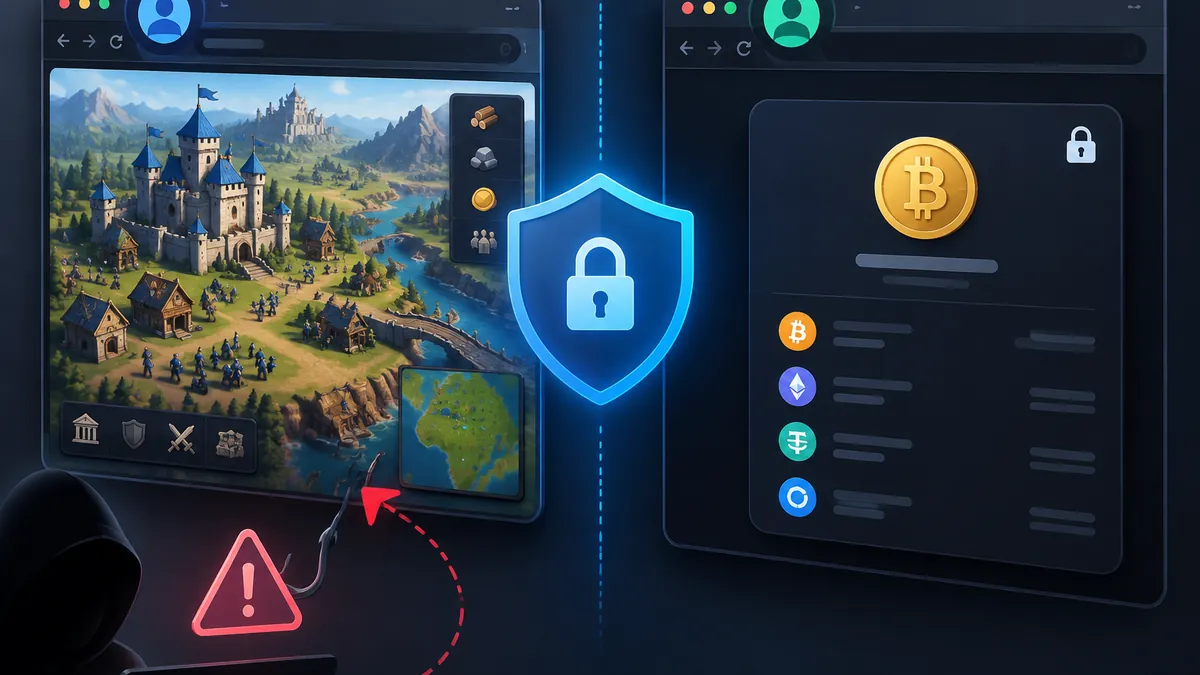
Also Read: Crypto Wallet Safety for Browser-Game Players: Separate Sessions, Extensions and Sign-In Habits
Start with a change record, not a promotional announcement
Before drafting a blog post, social update, or email, create an internal change record. This is the canonical source from which every public message should be derived. Its job is to make the operational facts stable before different teams begin summarising them in their own words.
At minimum, the record should state the effective date and time zone; the product, chain, asset, feature, or contract affected; the exact user impact; and whether action is required. It should also identify what is not changing. For example, if a network’s withdrawal fee changes, say whether deposit addresses, account balances, trading pairs, and withdrawal timing remain unchanged. Users often fill silence with worst-case assumptions.
Include a short decision tree. A user should be able to identify their situation and see the appropriate action: do nothing, update an app, stop using an old address, approve a migration through the official interface, or contact support through a listed channel. Avoid vague calls to action such as “secure your account now” when the real instruction is simply to use a newer app version. Urgency without specifics is both confusing and easily copied by scammers.
Assign a version number and a named owner to this record. When a detail changes, update the version, note the reason, and preserve the previous wording internally. This discipline prevents a common failure: support agents continuing to share an outdated message after the technical team has changed the rollout plan.
Audit every place users may encounter outdated instructions
Publishing a correct notice on one page does not make the rest of the internet correct. Users may reach an old help-centre article through search, see a cached social post, ask a community moderator, or receive an AI-generated answer based on stale public material. The practical question is not only “What did we publish?” but “What might a user see before arriving at the official update?”
Begin with assets you control: product screens, status pages, release notes, FAQs, onboarding emails, automated support macros, in-app tooltips, pinned community posts, social bios, and old announcements. Search for prior asset names, network names, contract addresses, fee figures, screenshots, and phrases such as “supported” or “available.” Retire, redirect, or visibly label obsolete instructions rather than quietly leaving them in place.
Do not try to correct every third-party mention individually. Prioritise sources that users are likely to treat as instructions: highly visible search snippets, major community channels, frequently linked tutorials, partner documentation, and pages ranking for the old feature or asset name. If a third-party guide cannot be updated, ask for an editorial correction or publish a clear official clarification that can be linked in replies.
Finally, test the user journey. A team member who did not write the update should search for the old wording, navigate from a mobile device, and try to determine the safe action in under a minute. If the answer depends on insider knowledge, the communications package is not ready.
Write an update package for normal users, support staff, and security-conscious users
One announcement rarely serves every reader. A new user wants a plain answer to “Do I need to do anything?” A support agent needs approved responses to predictable questions. A security-conscious user needs enough detail to distinguish a genuine change from a fraudulent request. Build one source of truth, then prepare concise versions for these different needs.
The public overview should lead with the practical effect, not implementation detail. State what changed, who is affected, when it takes effect, and the required action, if any. Put the official destination in a durable location such as release notes or a help-centre page, rather than relying only on a fast-moving social post. Use specific names and dates. “Withdrawals on Network X will pause at 14:00 UTC on 12 June” is more useful than “maintenance is coming soon.”
The detailed page can explain eligibility, supported versions, expected downtime, fees, rollback conditions, and known limitations. If a smart-contract interaction is necessary, identify the official interface and contract address where appropriate, but do not suggest that users should paste a seed phrase, private key, or recovery phrase anywhere. A legitimate migration should never require a user to disclose those secrets.
For support staff, prepare short, approved answer blocks for questions such as: Is this message real? Must I move funds? What happens if I miss the date? Are balances at risk? Which networks are affected? Where can I verify the notice? Give agents a clear escalation route for edge cases. They should not improvise technical or security claims in public replies.
Label uncertainty honestly. A phased rollout, an external dependency, or a temporary suspension may have variables. Explain what has been confirmed, what remains subject to change, and when the next update will be posted. Transparent uncertainty is safer than false precision, particularly when users are deciding whether to transact.
Make scam resistance part of every operational update
Any visible crypto change creates a convincing pretext for phishing. Criminals can copy logos, reuse announcement language, create a similar handle, and claim that immediate action is needed to “protect” funds. The safest communications design assumes that malicious copies will appear.
Every material notice should repeat a small set of communication boundaries: the official website or status page where updates are published; the verified support channels; the channels the organisation does not use for account help; and the actions staff will never request. These boundaries should be consistent across the product, documentation, social profiles, and community moderation scripts.
A concrete wallet example is MetaMask’s Official Support Channels, which sets out recognised support routes and makes clear that staff will not ask for a Secret Recovery Phrase. Any provider should publish equivalent boundaries for its own service, rather than relying on users to infer them from a general safety warning.
Build independent verification into the update. Tell users to begin from a bookmarked official site or a known in-app notice, not from a direct message, ad, search result, or unexpected email link. Where practical, provide a stable release-notes URL and show the notice date, version, and status. This allows a cautious user to compare a message with the authoritative source without replying to the sender.
Prepare a response plan for impersonation before it occurs. Community moderators should know how to collect screenshots and URLs, hide malicious replies where platform tools permit, post a brief corrective notice, and direct affected users to official reporting channels. The FTC’s guidance, FTC Offers Tips for Businesses Impersonated as Part of a Phishing Scam, reinforces the value of promptly alerting customers through established channels, offering resources to affected people, contacting law enforcement when appropriate, and reviewing security practices after an incident.
Do not overuse alarming language. A calm notice that says “We will never ask for your recovery phrase or request a transfer to verify your account” is more credible and more reusable than a stream of vague warnings. The best anti-phishing message gives users a simple method to verify claims for themselves.
Assign owners, approval steps, and a review schedule
Clear writing cannot compensate for unclear responsibility. For any change with a possible effect on custody, payments, access, fees, or contract interaction, name an accountable owner for technical accuracy, security review, customer communications, support readiness, and final publication. The same person does not need to perform every task, but someone must be responsible for resolving conflicts between them.
A lightweight approval sequence can prevent serious mistakes: technical owner confirms facts; security reviewer checks for unsafe instructions and phishing implications; legal or compliance reviewers assess disclosures where needed; support verifies that answers and escalation paths are workable; and a communications owner ensures that each channel points to the same canonical source. For urgent incidents, pre-approved templates can accelerate this process without bypassing it.
Automation can help identify old pages, draft channel-specific summaries, organise recurring questions, or flag inconsistent terminology. It should not make the final call on wording that could influence a user’s funds or security behaviour. This aligns with the position set out at https://www.ohlas.io/about: automation can handle repetitive work while users retain control over strategy, content, and final decisions. In a crypto setting, human approval is particularly important for wallet actions, contract-related warnings, and claims about the safety or availability of assets.
Set review points after publication. Check support tickets, community questions, searches for old instructions, phishing reports, and completion rates for any required action. Repeated questions usually indicate that a key detail is missing, buried, or written in jargon. Update the canonical notice, then refresh the short-form messages that point to it.
Close the process only when the change is fully reflected in product screens, documentation, support material, and the most visible community locations. Keep an archive of the final notice and its versions. A well-maintained archive gives users evidence that an update is genuine, helps future staff understand prior decisions, and reduces the chance that yesterday’s guidance becomes tomorrow’s scam bait.