

Crypto Freelancer Bookkeeping: Track Phone Top-Ups Without Double-Counting Costs
 Chris
21 October 2026 6:23 AM
.
8 min read
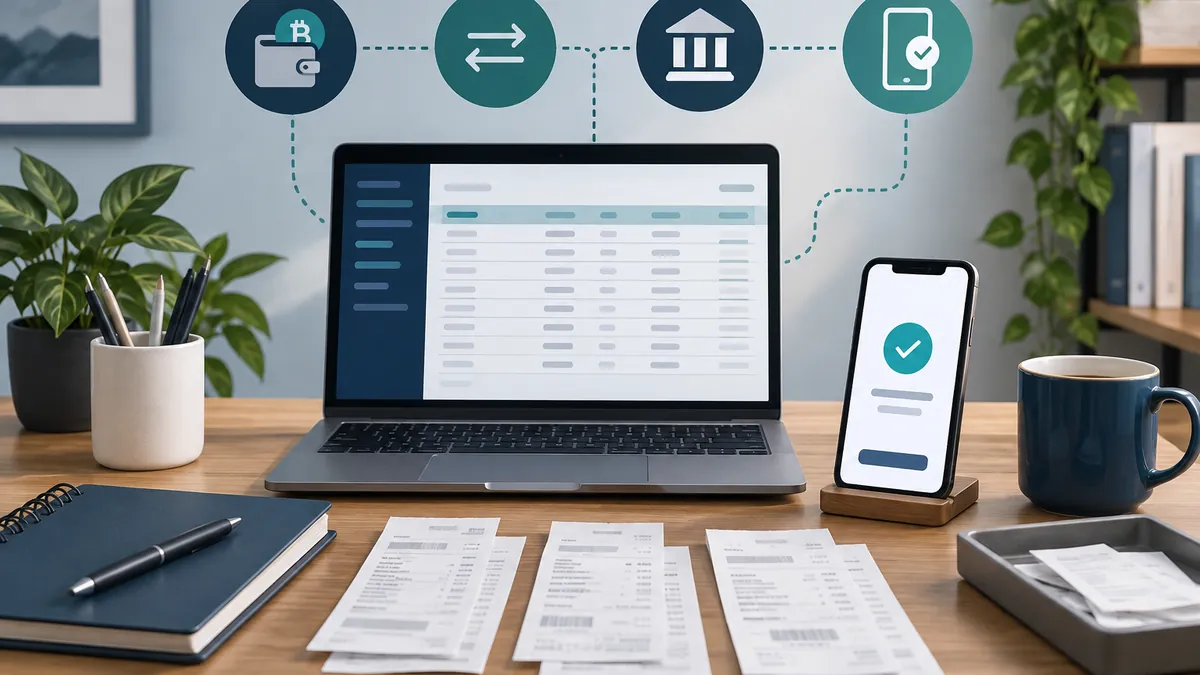
A small phone-credit purchase can create a surprisingly long paper trail when you earn cryptocurrency. A client pays your wallet, you sell some tokens, withdraw money to a bank account and use a card to top up a mobile number. Those records describe several events, not several versions of the same expense.
The goal is to connect them without counting the money twice. An international mobile top-up makes a useful example because the payment amount, credit delivered and order status each answer a different bookkeeping question. This workflow concerns evidence and reconciliation; whether an expense is deductible depends on your circumstances and local rules.
Map the transaction: crypto income, cash conversion and phone credit
Start by identifying the purchase separately from its funding. For a conventional top-up, Numio lets you begin by choosing a destination country and entering the recipient’s mobile number. Confirm both with the recipient before proceeding, especially when sending credit to someone abroad.
The sequence described at https://www.numio-mobile.com/how-it-works then moves through amount selection and payment, followed by submission to the operator after payment confirmation. Numio says the final top-up amount may be rounded down to an operator-supported denomination. That makes the requested amount, final credit amount and payment record separate checkpoints. This example does not assume that Numio accepts cryptocurrency or provides accounting tools.
Also Read: Support resistance levels
Work backward from that purchase to identify the earlier events. Receiving tokens for client work relates to income. Selling those tokens relates to a digital-asset disposal. Moving the sale proceeds from an exchange to your own bank account is a transfer of funds. Buying phone credit is the purchase. Each event may need a record, but they should not all become phone expenses.
For example, suppose a client pays tokens valued at $500 when received. You later sell part of that holding, receive $100 in cash proceeds and move those proceeds to your bank. You then spend $12 on phone credit. The mobile purchase is not $500 or $100 simply because those amounts appear earlier in its funding trail. Any tax consequences of receiving and selling the tokens require separate consideration.
Build a record trail without counting the same money twice
Give each event a reference in your spreadsheet or bookkeeping system, then connect related references. A useful chain might run from client invoice to wallet receipt, exchange trade, bank transfer and top-up order. You do not need to trace particular units of bank-account cash to a purchase; you need enough evidence to explain the transactions and reconcile the balances.
For the client payment, retain the invoice, date received, asset and quantity, wallet transaction identifier and relevant fiat valuation. For a conversion, keep the trade confirmation showing what you sold, what you received and any stated fee. Save withdrawal records and the matching bank entry. For the top-up, preserve the checkout breakdown, order confirmation and final delivery status.
Also Read: Tax education for crypto
One purchase can appear in several places without being several expenses. An order email, card statement and bookkeeping entry may all describe the same $12 payment. Attach or cross-reference them to one purchase record rather than entering each document as a new charge. Equally, an exchange withdrawal and its matching bank deposit should not become a second client payment.
For U.S. readers, the IRS’s Publication 583: Starting a Business and Keeping Records explains supporting documents, recording expenses, separating business and personal accounts, and reconciling records. Its principles support a clear receipt-to-payment trail. They do not establish that a particular phone top-up qualifies for a deduction.
Use a consistent filename such as “2026-04-08_phone_order-reference” and store the documents together. Include a short purpose note while the details are fresh: which line received the credit, who uses it and why it relates to your work. An order reference is usually more useful for later matching than a vague description such as “mobile payment.”
Reconcile exchange fees, currency conversion and the credit delivered
A frequent source of confusion is treating every difference between two records as a fee. The amount leaving an exchange may differ from the amount reaching your bank because of a disclosed withdrawal charge. A card statement may differ from checkout because of currency conversion or an issuer charge. Meanwhile, the operator may support only certain top-up denominations. These differences need separate explanations.
Also Read: Economics crypto principles
Check the purchase in three layers. First, record the merchant’s final order amount and currency. Second, match it to the settled payment in your account’s currency, including any separately identified payment charge. Third, verify the mobile credit actually delivered. Do not assume that a credit amount expressed in one currency should numerically equal a card debit expressed in another.
Suppose checkout confirms a top-up at an operator-supported amount, but your bank later shows a slightly different home-currency debit. Preserve both records and check the stated exchange rate and charges before assigning the difference. If the explanation is missing, mark it for investigation rather than inventing a “network fee” or assuming the operator withheld credit.
Crypto-related charges also belong to the event that generated them. An exchange trading fee is not automatically part of a phone-service expense just because the sale helped fund the purchase. Treatment can depend on the transaction and jurisdiction. Keep gross amounts, fees and net proceeds available so your software or adviser can apply the relevant rules.
The IRS’s Frequently Asked Questions on Digital Asset Transactions addresses U.S. federal tax questions involving digital assets received for services, valuation, basis, disposals and records. For a U.S. freelancer, the key distinction is that a crypto sale can require its own calculation even when the cash later pays an ordinary operating cost. Paying directly with crypto, where a merchant supports it, can also involve a disposal; it does not erase the separate purchase record.
Keep valuation methods and time references consistent. A client invoice amount, the value of tokens when received and later sale proceeds may differ. Stablecoin labels do not remove the need to retain actual quantities, values and fees. If several purchases follow one conversion, record that conversion once rather than reproducing the entire trade under every expense.
Separate business use, personal support and unresolved purchases
The recipient’s identity and the purpose of the top-up matter more than the account used to pay. Credit for a work-only line has a different purpose from credit sent as a gift to a relative. Paying through a business card does not turn personal support into a business cost. Likewise, using a personal card for a genuine work purchase does not remove the need to document it appropriately.
For a mixed-use phone, retain a reasonable basis for distinguishing work from personal use. Depending on local requirements, that might involve usage records or another consistent allocation method. Do not automatically label the whole recharge “business” because you occasionally answer client messages on that number. Record the rationale and seek local advice when the amounts or rules warrant it.
Order status is another classification issue. A pending card authorization is not the same evidence as a settled charge and delivered top-up. If delivery is unresolved, flag the purchase for follow-up instead of silently treating it as complete. The precise accounting treatment depends on your accounting method, but the operational status should remain visible.
Numio states that failed top-ups receive an updated status and next steps; a pending payment authorization may be released or a refund may be issued under its Refund Policy. It also warns that submitted top-ups may not be reversible. Save the order reference and status messages, check the destination and amount before confirming, and avoid a duplicate purchase merely because delivery is uncertain.
If money returns, match it to the original payment. A released authorization may simply disappear without a settled debit, whereas a refund can create a separate credit on the statement. Those are different trails. Preserve the original record and the resolution rather than deleting the purchase and losing the explanation for the account activity.
Close the month with a short reconciliation checklist
Reconciliation means checking that your records explain what happened across systems, not merely confirming that a spreadsheet total looks plausible. Work through the wallet and exchange activity, match transfers to bank records, and then verify purchases against settled payments and delivery evidence. Investigate unmatched items while confirmations and support messages are still easy to find.
- Income: Is the client payment recorded once, with its invoice, token quantity, receipt date and relevant fiat value?
- Conversion: Is each sale or swap separately documented, with proceeds, fees and the information needed for any basis calculation?
- Transfers: Are movements between your own accounts matched without being mistaken for new income or purchases?
- Top-up: Do the final order, settled debit and delivered credit have a clear connection, with any currency differences explained?
- Purpose: Is the payment identified as business, personal or mixed-use, with supporting notes where needed?
- Exceptions: Are pending orders, failed payments, released authorizations and refunds still tracked until resolved?
Keep a short exception list rather than forcing every discrepancy into an expense category. An unexplained charge, missing receipt or uncertain delivery status is a task to resolve, not an invitation to guess. For support requests, use the order reference and relevant dates; never send a wallet seed phrase, private key or full card details.
The useful habit is simple: record each economic event once and retain the evidence that connects it to the next. Crypto income, asset conversions, account transfers and phone credit can form one funding story while remaining distinct bookkeeping events. That separation makes even a small top-up easier to verify—and makes the rest of your freelance records easier to trust.
You might also like