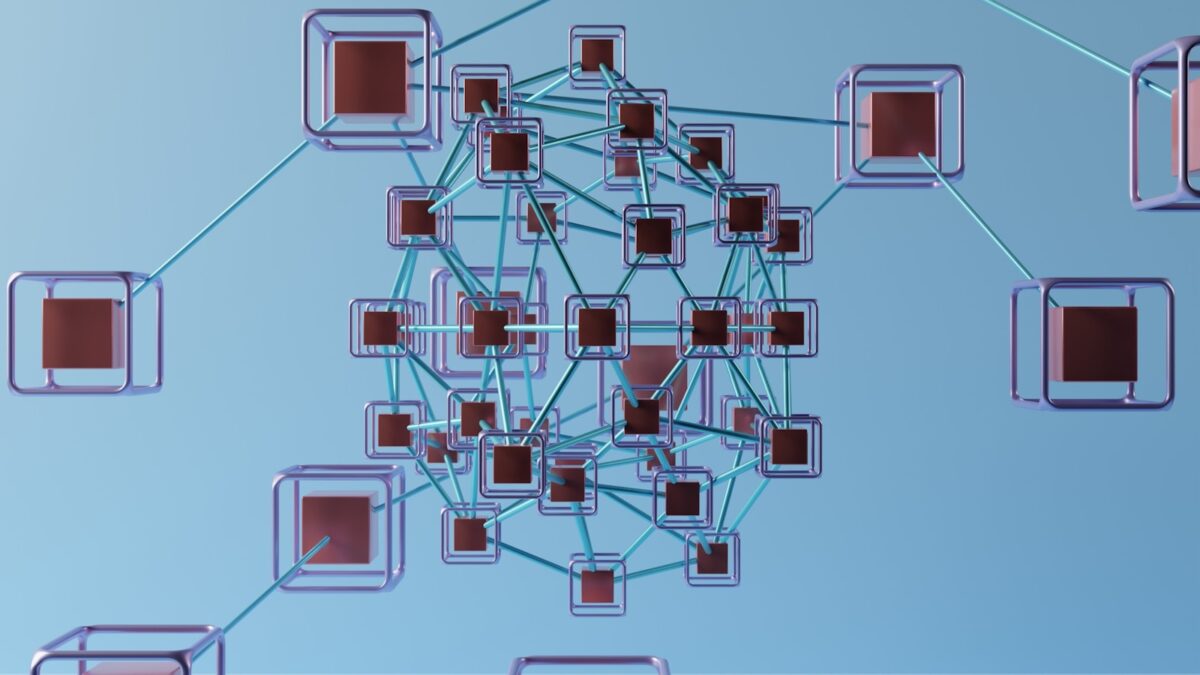

Arweave permanent data storage
 Chris
22 December 2025 12:44 PM
.
10 min read
Chris
22 December 2025 12:44 PM
.
10 min read

Utilize the blockweave structure to maintain continuous access to archived content without reliance on centralized servers. This innovative model stores information by linking new blocks with recall of previous ones, enabling efficient retrieval and durable preservation. The permaweb operates atop this foundation, creating a decentralized network that hosts immutable websites and applications.
The endowment mechanism ensures sustainability by allocating upfront fees into a pooled fund. This fund finances ongoing replication and redundancy, guaranteeing indefinite retention while minimizing future costs. By balancing initial investment against long-term accessibility, it redefines economic incentives for persistent hosting.
Explore how distributed nodes collaborate within this ecosystem to validate and archive files securely. Each participant contributes storage resources in exchange for rewards, fostering a resilient environment resistant to data loss or censorship. This collaborative approach transforms archival practices through transparent consensus and cryptographic proofs.
Arweave Permanent Data Storage
The blockweave protocol enables indefinite retention of information by introducing a novel approach to distributed ledger architecture. Unlike traditional blockchain systems that store data linearly, this model incorporates a unique weaving mechanism, allowing for scalable and cost-efficient preservation of content over time.
Also Read: Cream Finance lending
This innovative design is supported by an endowment system, where initial payments cover ongoing maintenance fees, ensuring sustainable hosting without recurrent costs. By allocating funds into this financial pool, the network incentivizes miners to continuously replicate and secure stored content indefinitely.
Technical Foundations of the Blockweave Model
The core innovation lies in integrating new blocks with references not only to immediate predecessors but also to randomly selected previous blocks within the chain. This strategy creates a “weaving” effect, optimizing resource usage and improving redundancy. Nodes validate these links through Proof of Access consensus, which requires demonstrating possession of prior segments before appending new entries.
Such mechanism enhances long-term availability by encouraging storage providers to maintain entire archives rather than just recent additions. The interaction between this access proof and the economic incentives from the endowment model forms a self-reinforcing cycle that supports persistent data retention.
- Endowment Funding: One-time payment secures continuous upkeep
- Proof of Access: Validates archival completeness for mining eligibility
- Decentralized Hosting: Distributes replication across numerous independent nodes
The permaweb layer builds upon this infrastructure by offering an accessible interface for retrieving stored artifacts via permanent URIs. It acts as a decentralized web, where applications and documents can be hosted indefinitely without risk of censorship or disappearance due to centralized failures.
Also Read: Terra Luna ecosystem collapse
Case studies demonstrate practical use cases such as archiving scholarly articles, legal records, and cultural heritage materials with guaranteed longevity. For instance, major research institutions have experimented with embedding datasets onto the network to ensure future accessibility beyond conventional digital preservation methods prone to hardware obsolescence or provider shutdowns.
The intersection of economic incentives and cryptographic protocols within this ecosystem offers fertile ground for further experimental investigation into decentralized archival technologies. Researchers are encouraged to analyze transaction fee dynamics in relation to archive size growth, miner participation rates under varying endowment conditions, and scalability thresholds under heavy network loads.
How Arweave Stores Data
The core mechanism behind the Arweave network involves a novel approach to decentralized information preservation, utilizing a blockweave structure that enhances efficiency and permanence. This model links each new block not only to its immediate predecessor but also to a randomly selected previous block, optimizing verification processes and incentivizing miners through continuous validation of stored content. Consequently, the system achieves scalable and durable archiving without compromising on integrity or accessibility.
Unlike conventional distributed ledgers, this protocol employs an endowment-based incentive scheme where contributors fund a sustainable pool to guarantee indefinite retention of uploaded content. The endowment ensures that once an item is added, it remains accessible indefinitely without requiring ongoing payments from users. This financial design aligns long-term incentives with decentralized hosting, addressing traditional challenges related to data availability and economic feasibility in perpetual networks.
Also Read: Golem decentralized computing
Technical Structure and Permaweb Integration
The underlying architecture supports what is known as the permaweb–an immutable layer built atop the foundational ledger that hosts websites, applications, and documents permanently. Each entry into this archive is cryptographically linked and distributed across numerous nodes globally, creating redundancy that withstands censorship or loss of individual servers. The permaweb’s reliance on content addressing rather than location-based URLs introduces robustness in retrieval mechanisms.
Storage on this platform involves encoding information into blocks validated by miners who perform proof-of-access consensus–a variation of proof-of-work requiring access to historical segments of the ledger before appending new transactions. This requirement encourages persistent replication of existing content throughout the network. Practical experiments show that such a consensus fosters high availability while minimizing storage duplication overhead compared to standard blockchain models.
- Blockweave: A blockchain variant connecting blocks via random references to prior records.
- Proof-of-Access: Mining algorithm necessitating verification of stored archives before block addition.
- Endowment Fund: Financial reserve sustaining perpetual hosting costs through interest accrual.
This paradigm shift enables creators and institutions to rely on enduring digital preservation without dependence on central authorities or recurring fees. Case studies involving academic repositories demonstrate successful deployment for scholarly article archiving with guaranteed immutability over decades. Similarly, multimedia projects have leveraged this framework for cultural heritage conservation initiatives ensuring uninterrupted public access.
The experimental nature of combining these technical elements invites further investigation into optimizing storage density versus retrieval speed trade-offs. Researchers might explore adaptive replication strategies or enhanced cryptographic proofs tailored for large-scale archival networks. Observing performance metrics under varying load conditions can reveal insights applicable beyond this ecosystem into broader decentralized information management systems.
This innovative approach exemplifies how aligning economic incentives with novel consensus algorithms creates resilient infrastructures capable of preserving knowledge indefinitely. The interaction between architectural design choices and financial models forms a fertile ground for inquiry–encouraging practitioners and academics alike to refine methodologies for sustained digital heritage conservation within trustless environments.
Cost structure for permanence
The economic framework enabling infinite retention relies on a unique endowment mechanism that guarantees continuous availability without recurring fees. This model leverages an initial upfront payment, which is invested to generate yield sufficient to cover future incentives for nodes maintaining the distributed ledger. Unlike traditional decentralized networks demanding ongoing compensation, this approach ensures indefinite accessibility by capitalizing on compounding returns within the underlying blockweave architecture.
Within this system, data inclusion requires a one-time fee calculated based on size and network-wide storage costs, which feeds into the collective endowment pool. The blockweave’s design optimizes resource allocation by encouraging nodes to replicate content through proof mechanisms that balance transaction throughput with archival responsibilities. Consequently, the pricing reflects not only physical replication expenses but also long-term economic sustainability tied to tokenomics and staking models embedded in the protocol.
Analyzing cost determinants and practical implications
The interplay between initial deposit size and yield rates dictates longevity of archival commitments; higher yields reduce upfront contributions necessary to maintain availability over centuries. Empirical studies demonstrate that conservative interest assumptions can sustain gigabytes of information with modest token allocations, reinforcing feasibility for diverse use cases such as immutable web hosting or scientific record preservation within the permaweb framework.
Experimental deployments reveal that efficient compression algorithms combined with selective redundancy optimize network overhead without compromising resilience. For instance, projects archiving legal documents have managed cost-effective permanence by balancing data chunking strategies against retrieval latency and storage node incentives. These findings suggest that continuous refinement of economic parameters aligned with evolving hardware efficiency will further decrease entry barriers for enduring digital repositories.
Integrating Arweave with Apps
To implement archive functionality within applications using Arweave, developers must understand the underlying endowment model that finances indefinite retention of information. This approach allows a one-time payment to sustain perpetual accessibility by incentivizing miners through an economic mechanism that balances initial costs and future retrieval incentives. By embedding this model into app workflows, software can ensure content remains accessible on the permaweb without recurring fees or reliance on centralized servers.
Integration begins with utilizing Arweave’s transaction protocol to embed essential content directly onto its network. Applications can connect via SDKs designed to handle interactions such as uploading files, retrieving archived records, or verifying integrity through cryptographic proofs. These SDKs abstract complexities of the blockweave data structure, enabling developers to focus on seamless user experiences while leveraging robust decentralized archiving capabilities.
Technical Implementation and Use Cases
The distinctive storage paradigm employed relies on bundling data into permanent blocks linked across the chain, which facilitates efficient validation and retrieval processes. For instance, decentralized social media platforms benefit from embedding posts and metadata immutably, preventing censorship or loss over time. Similarly, scientific research portals can archive experimental results with timestamped authenticity guaranteed by the consensus-driven ledger.
Developers should consider integrating automated indexing services alongside data uploads to enhance searchability within the permaweb environment. Tools like GraphQL endpoints allow apps to query archives dynamically based on parameters such as timestamps, tags, or authorship. This integration supports creation of rich interfaces for exploring historic content without sacrificing decentralization principles.
- Content permanence: guarantee lifetime availability beyond traditional cloud solutions.
- Cost efficiency: leverage endowment-backed payments avoiding monthly fees.
- Censorship resistance: immutable records prevent unauthorized alterations or deletions.
The challenge lies in balancing upload latency against cost constraints inherent in the endowment funding scheme. Experimentation shows batch processing combined with asynchronous confirmation callbacks provides optimal responsiveness in interactive applications requiring large-volume archival writes. Developers are encouraged to prototype these mechanisms within sandbox environments to calibrate trade-offs between immediacy and expense before production deployment.
This exploration invites further inquiry into hybrid architectures combining localized ephemeral caches synchronized periodically with distributed archives. Such designs could maintain fast UI responsiveness while guaranteeing long-term preservation governed by Arweave’s economic incentives. Investigations into novel indexing algorithms tailored for permaweb querying could unlock more sophisticated discovery capabilities suited for research databases or legal document repositories seeking immutable proof of record existence over decades.
Security and Data Retrieval: Conclusion
To ensure robust confidentiality and accessibility within decentralized ecosystems, leveraging the endowment model embedded in the blockweave architecture is essential. This financial mechanism guarantees indefinite archiving by incentivizing nodes to maintain content availability without continuous expenditure, fundamentally transforming how information permanence is economically sustained.
The integration of a distributed ledger with a specialized linking structure enables efficient retrieval across vast data pools while preserving integrity against tampering or loss. The permaweb interface further enriches this framework by layering mutable applications over immutable records, creating dynamic yet secure access pathways that evolve with user needs.
Key Technical Insights and Future Perspectives
- Endowment-Backed Longevity: Allocating upfront capital into an interest-bearing fund addresses ongoing maintenance costs, allowing archives to remain accessible beyond typical blockchain limitations.
- Blockweave Innovation: By connecting new entries to randomly selected previous blocks, the system reduces redundancy and optimizes verification processes, enhancing both security and scalability.
- Content Retrievability: Advanced indexing protocols and unique cryptographic proofs enable rapid extraction of specific fragments without exhaustive network queries.
- Permaweb Synergy: Combining immutable records with interactive frontends fosters an ecosystem where archival data can be actively utilized in decentralized applications, expanding use cases beyond mere storage.
The implications extend into sectors demanding long-term verifiability, such as scientific research archives, legal documentation, and cultural heritage preservation. Experimentation with hybrid consensus models and adaptive incentive algorithms presents promising avenues for enhancing resilience against evolving network threats.
Future investigations should explore cross-chain interoperability to integrate diverse blockchain platforms into a unified archival environment. Additionally, refining retrieval latency through layered caching strategies could bridge the gap between permanence and performance. Encouraging community-driven governance will be pivotal in maintaining trust while adapting economic parameters of the endowment fund to fluctuating market conditions.
This multi-faceted approach invites researchers and developers to systematically analyze how decentralized permanence can redefine data stewardship principles and enable sustainable digital memory infrastructures worldwide.
You might also like